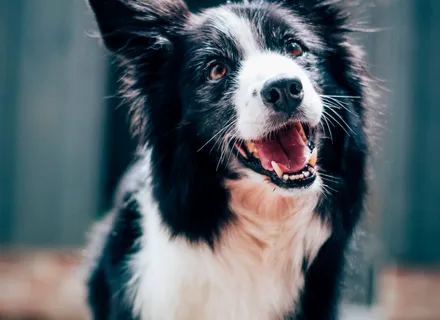
If you ask a dog trainer what the most common concern in their inbox is, the answer in 2026 is almost universal: reactivity. Bark Busters’ national 2026 behaviour analysis, drawn from roughly 50,000 owner inquiries, found that reactivity is the number one issue people seek help for, and that the overwhelming majority of cases are rooted in fear or anxiety rather than true aggression. That distinction matters. A reactive dog and an aggressive dog can look identical from the other side of the street, lunging, barking, hackles up, but the emotion driving the behaviour is different, and so is the path forward. This guide breaks down what reactivity actually is, how to tell it apart from aggression, what typically causes it, and the evidence-based steps that help.
What Does Reactivity Actually Mean?
Reactivity is an overreaction to a stimulus. The trigger might be another dog, a person in a hat, a skateboard, a delivery truck, a child running, or anything else the dog has come to associate with stress or excitement. The dog’s response is usually some combination of barking, lunging, pulling on the leash, growling, freezing, or spinning. The defining feature is that the response is bigger than the situation warrants and the dog struggles to recover.
Reactivity is an emotional state, not a personality trait. A reactive dog is not a bad dog. They are a dog whose nervous system has learned to fire too quickly, often because of fear, frustration, or overstimulation. Recognizing reactivity for what it is is the first step toward helping.
The most common forms
- Leash reactivity: The dog reacts to other dogs, people, or moving objects while on leash but is often fine off leash or behind a fence.
- Barrier reactivity: The dog reacts to triggers through windows, fences, or the bars of a crate.
- Stranger reactivity: The dog reacts to unfamiliar people approaching the home or family.
- Resource-related reactivity: The dog reacts when a person or another dog approaches food, toys, beds, or a favourite person.
The same dog can show one type and not another, which is part of why diagnosis matters before training begins.
How Is Aggression Different?
Aggression is the intent to cause harm. A truly aggressive dog is not just reacting to a trigger; they are choosing to escalate when they could have walked away. Aggression involves a willingness, even an eagerness, to make contact and do damage. It is far rarer than the internet suggests and almost never the right diagnosis for a leash-lunging family pet.
A useful way to think about it: reactivity is the dog yelling stop, aggression is the dog yelling come closer and find out. Most dogs who bite have given many reactive warnings first, and those warnings were either missed or punished. This is why suppressing reactivity with aversive tools is so risky. Removing the bark does not remove the fear, it just removes the warning.
Signs that lean toward true aggression rather than reactivity
- Calm, deliberate approach toward the trigger rather than a frantic explosion
- A history of bites that broke skin, not just air snaps or muzzle punches
- Continued pursuit after the trigger has retreated
- Resource guarding that escalates through clear warning signals
- No interest in disengagement, food, or escape when a trigger appears
If any of these patterns describe your dog, you need a qualified veterinary behaviourist or a credentialed professional trainer with aggression experience, not a generic group class.
What Causes Reactivity in the First Place?
Reactivity has many roots, and most reactive dogs have more than one contributing factor. Understanding the causes helps you build a plan that addresses the underlying emotion, not just the surface behaviour.
Genetics and individual temperament
Some dogs are simply wired more sensitive than others. Herding breeds, livestock guardians, and many terriers were selected for high environmental awareness, which is fantastic for working roles and harder to manage on a busy urban sidewalk. A sensitive dog raised perfectly can still be reactive, and that is not a failure of the owner.
Missed or rough socialization
The 3 to 16 week socialization window shapes a dog’s lifelong sense of what is normal and safe. Puppies who spend that window isolated, in a shelter, or in a fearful environment often emerge with a baseline wariness that looks like reactivity later. Our guide on puppy socialization covers what good socialization actually looks like.
A single bad experience
One off-leash dog rushing a puppy at the park can produce months or years of leash reactivity. Dogs generalize threat quickly and unlearn it slowly. Owners often remember the exact walk where everything changed.
Pain and medical factors
This is the most underdiagnosed cause of new or worsening reactivity. Hip dysplasia, dental disease, ear infections, thyroid imbalance, and vision changes all lower a dog’s tolerance for stimulation. A 2020 study in Frontiers in Veterinary Science found that undiagnosed pain was a contributing factor in roughly a third of behaviour referrals. If your dog’s reactivity is new, escalating, or doesn’t match their history, a full vet workup comes before any training plan.
Frustration, not fear
Some dogs are reactive because they desperately want to meet the trigger and the leash prevents it. Frustration reactivity looks similar to fear reactivity from the outside but feels very different to the dog. A dog who lunges at every approaching dog while wagging their tail and whining is usually frustrated, not afraid. The training plan differs accordingly.
A chronically over-aroused nervous system
Dogs who never fully decompress, due to too little sleep, too much excitement, an unpredictable household, or constant trigger exposure, live with an elevated baseline. Small triggers tip them over. Many reactive dogs improve simply by sleeping more, walking less, and lowering household chaos before any formal training begins.
How to Help a Reactive Dog: An Evidence-Based Approach
The training playbook for reactivity has matured considerably in the last decade. The combination of desensitization, counter-conditioning, and management has the strongest research backing and the most durable results.
Step 1: Rule out medical causes
Book a full veterinary exam before you spend a dollar on training. A pain workup, bloodwork, and a thyroid panel are reasonable asks for any dog with new or escalating reactivity.
Step 2: Lower the baseline before you train
A nervous system stuck in fight-or-flight cannot learn. For the first two to four weeks, focus on bringing your dog’s overall stress down rather than fixing the reaction:
- More sleep: Adult dogs need 12 to 14 hours of rest in a 24-hour cycle, puppies and seniors more. Many reactive dogs are sleep-deprived.
- Decompression walks: Long, sniffy, low-stimulation walks in quiet areas, on a long line if safe, do more for nervous system regulation than structured neighbourhood walks.
- Trigger holiday: If possible, take a complete break from the situations that set your dog off while you build skills. Drive to a quiet park instead of walking out the front door past the reactive trigger.
- Enrichment: Snuffle mats, lick mats, frozen Kongs, and scent work occupy the brain without raising arousal. Our guide on dog enrichment activities has 15 ideas to rotate through.
Step 3: Find the distance where your dog can think
The key concept in reactivity training is threshold, the distance at which your dog notices the trigger but can still eat, listen, and respond. Above threshold, your dog is in fight-or-flight and cannot learn. Below threshold, you have a working dog. Most owners try to train far too close. If your dog can hear other dogs barking inside a daycare from the parking lot and that is the closest they can handle, that is where you start.
Step 4: Counter-condition the trigger
The goal is to change your dog’s emotional response to the trigger, not just teach them a competing behaviour. The classic protocol:
- Trigger appears at sub-threshold distance
- High-value food appears (chicken, cheese, freeze-dried liver)
- Trigger disappears
- Food stops
Done consistently, the dog begins to anticipate good things when triggers appear. Over weeks and months, the threshold closes. This is slow, unglamorous, and the most effective protocol we have. The science behind this approach is the same science we covered in our deep dive on positive reinforcement training.
Step 5: Build coping behaviours
Once your dog can think near triggers, add behaviours that give them a job:
- Find it: Toss treats on the ground to redirect the head down and engage the nose
- U-turn: Cue a quick about-face to create distance without panic
- Look at that: Mark the moment your dog notices the trigger, then reward, teaching the trigger predicts treats
- Pattern games: Predictable rhythmic games like 1-2-3 walking patterns lower arousal by giving the dog a script
Step 6: Manage the rest
Training takes months. Management protects your dog from rehearsing the reactive pattern while training catches up. Walk at off-peak times, use visual barriers, cross the street early, avoid dog-park sidewalks, and consider a basket muzzle if there is any bite risk. Management is not failure, it is what makes training possible.
What Does Not Work
A short list of approaches that show up constantly in social media advice and that the behavioural research does not support for reactive dogs:
- Prong collars and e-collars: Adding pain or startle to a fearful or frustrated dog tends to suppress warnings rather than change the underlying emotion. The risk of escalation to biting goes up, not down.
- Alpha rolls and dominance-based correction: There is no credible evidence that reactivity is about dominance, and physical confrontation with a stressed dog is a fast path to a bite.
- Flooding (forcing the dog to confront triggers up close): Some dogs shut down and look calm, which gets mistaken for progress. They are not learning, they are dissociating, and the reaction usually returns worse.
- Letting the dog work it out at the dog park: Off-leash chaos is the opposite of controlled exposure and frequently makes things worse.
When to Get Professional Help
Most reactive dogs benefit from working with a qualified professional. Look for credentials such as KPA-CTP, CPDT-KA, CDBC, IAABC, or a board-certified veterinary behaviourist (DACVB) for the most complex cases. Avoid trainers who guarantee fast results, lean heavily on tools, or talk about dominance. The right trainer will spend the first session asking questions, not correcting your dog.
Get help sooner rather than later if:
- Your dog has bitten or attempted to bite a person or another dog
- The reactivity is escalating despite your best efforts
- You are starting to avoid walks because of dread
- Anyone in the household is afraid of the dog
How Pawlington Can Help
Reactivity is one of the most common reasons families come to us, and we work with reactive dogs every day. Our one-on-one training sessions use the desensitization and counter-conditioning approach outlined above, with handlers trained in modern, force-free methods. For dogs whose reactivity is leash-specific and who do well with other dogs once introductions are done properly, our daycare and excursion programs offer carefully managed socialization in low-pressure environments. Every new daycare dog goes through a temperament assessment first so we can match them to a group where they will thrive.
If you are not sure whether your dog is a candidate, that is exactly what the assessment is for. There is no judgment, no pressure, and no obligation. We will tell you honestly what we can and cannot help with.
Reactivity is one of the most fixable behaviour problems we work with, but only when the plan addresses the underlying emotion rather than the surface behaviour. If you are walking your dog with dread, crossing streets to avoid other dogs, or wondering whether your dog is the problem, you are not alone, and your dog is not broken. Book a behavioural assessment with our training team and let’s build a plan that works for both of you.